Defining Violence of Action


Introduction to Violence of Action
Understanding the concept of violence of action is crucial for anyone involved in tactical operations. After all, every "CQB Bro" will tell you the three principles are speed, surprise, and violence of action. But when you ask people what this actually means, they can often correctly describe surprise and speed, but they have a hard time pointing out what violence of action means.
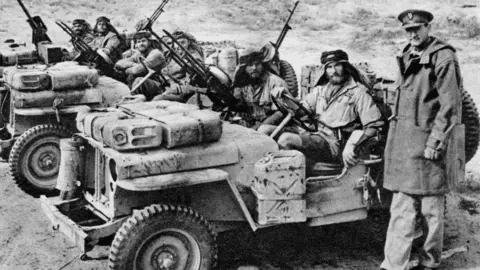
The first ones to coin the phrase were the Special Air Service in World War 2, with "Speed, Aggression, Surprise". Aggression, which highlighted the use of overwhelming force and controlled aggression, was later changed to "Violence of Action" by Colonel Beckwith and the newly formed Delta Force. However, these were not created by large institutional bodies or by anyone with any degrees in military arts and science, but rather by a small, high-performing unit.
A Better Term?
So is violence of action the sum of speed and surprise? Or is it its own factor? So far, it looks like it’s a bit of both, with both "Aggression" and "Violence of Action" lacking the terms "violence" and "aggression" in warfighting doctrine. But we have another term coming really close to it: “boldness”.
Boldness is described as a unit's or a leader's willingness to take action without being overcautious, or even against all odds. Examples are giving up security perimeters, not waiting for higher-up permission, and not overthinking decisions.
"To stand still, to hesitate, is to stagnate, lose initiative, and pass the initiative to the enemy." - MCDP 1
A bold plan usually results in speed and surprise as well as employment of overwhelming force, as fewer assets are needed for security and the like. MCPD 1 says, "Boldness is the characteristic of unhesitatingly exploiting the natural uncertainty of war to pursue major results rather than marginal ones." Boldness is a genuine creative force, for wherever it is superior, it will take advantage of its opponent's weakness.
However, just like anything, boldness requires restraint in the ever-changing landscape of war. Boldness is based on strong situation awareness: We weigh the situation, then act. In other words, boldness must be tempered with judgment lest it border on recklessness.
Boldness is superior to timidity in every instance, although boldness does not always equate to immediate aggressive action. A nervy, calculating patience that allows the enemy to commit himself irrevocably before we strike him can also be a form of boldness. By combining the correct levels of boldness and restraint, we can deliver effective, heavy blows to our enemy and exploit their weaknesses.